Tree removal in Conroe — priced on the tree, not the panic
Every removal gets a written, per-tree number before work starts. Sectioned takedowns, controlled rigging, full cleanup and haul-off.
When a tree actually needs to come down
We turn down removal work every week, because a lot of scary-looking trees are fine. The ones that aren’t: dead or dying pines (a brown crown in this county usually means beetles have finished the job underneath), cracked leaders and included bark on mature oaks, root plates lifted by a saturated spring, and anything the last storm left hung up in another tree. Those don’t recover — they just pick their moment.
The rest of the calls are judgment: a healthy tree planted too close to the slab, roots in the sewer line, or shade the new pool can’t live with. We’ll give you an honest read either way — and if pruning solves it, we’ll quote that instead, because it’s a fraction of the price.
How we take a tree down in a Conroe backyard
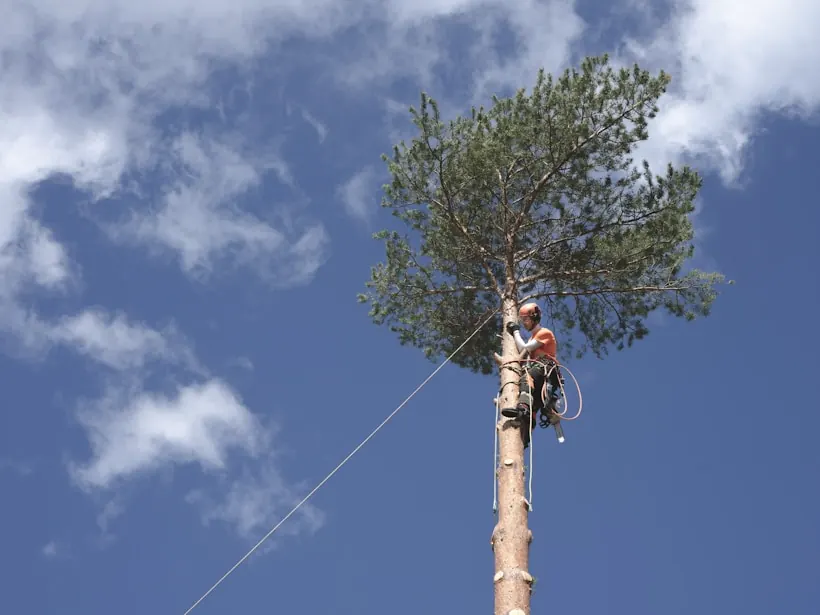
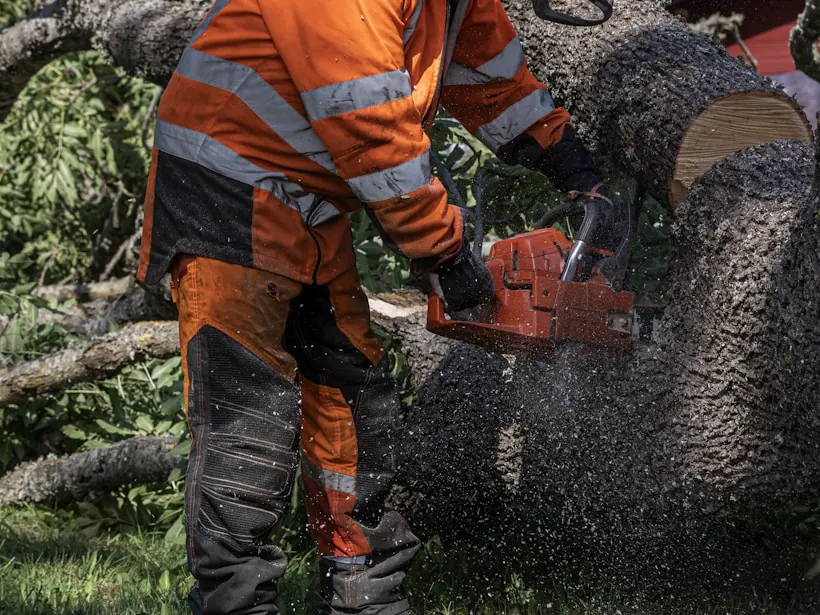
Almost nothing here gets felled whole — lots are too tight and the trees are too tall. A climber works the crown down in pieces, limbs are roped or dropped to a controlled zone, and the trunk comes down in sections short enough to control. Fences, roofs, and flowerbeds are the constraint the whole plan is built around. When the ground crew is done, the wood is bucked and hauled, brush chipped, and the yard raked — you keep firewood only if you ask.
What removals cost in Montgomery County
Typical: $200–$2,000. An ornamental or small pine at the bottom of that; an 80-foot loblolly with open access lands $800–$1,500; add tight access, a dead crown nobody can safely climb, or crane time and it climbs from there. Emergencies — trees on structures, blocked driveways — run on their own scale, up to about $5,000 for the worst cases. The estimate is free and stays fixed once it’s in writing.
Already got a stump from an old removal? That’s a separate, cheaper visit.
Want a number on that tree?
Written per-tree pricing, free, usually within a couple of days.